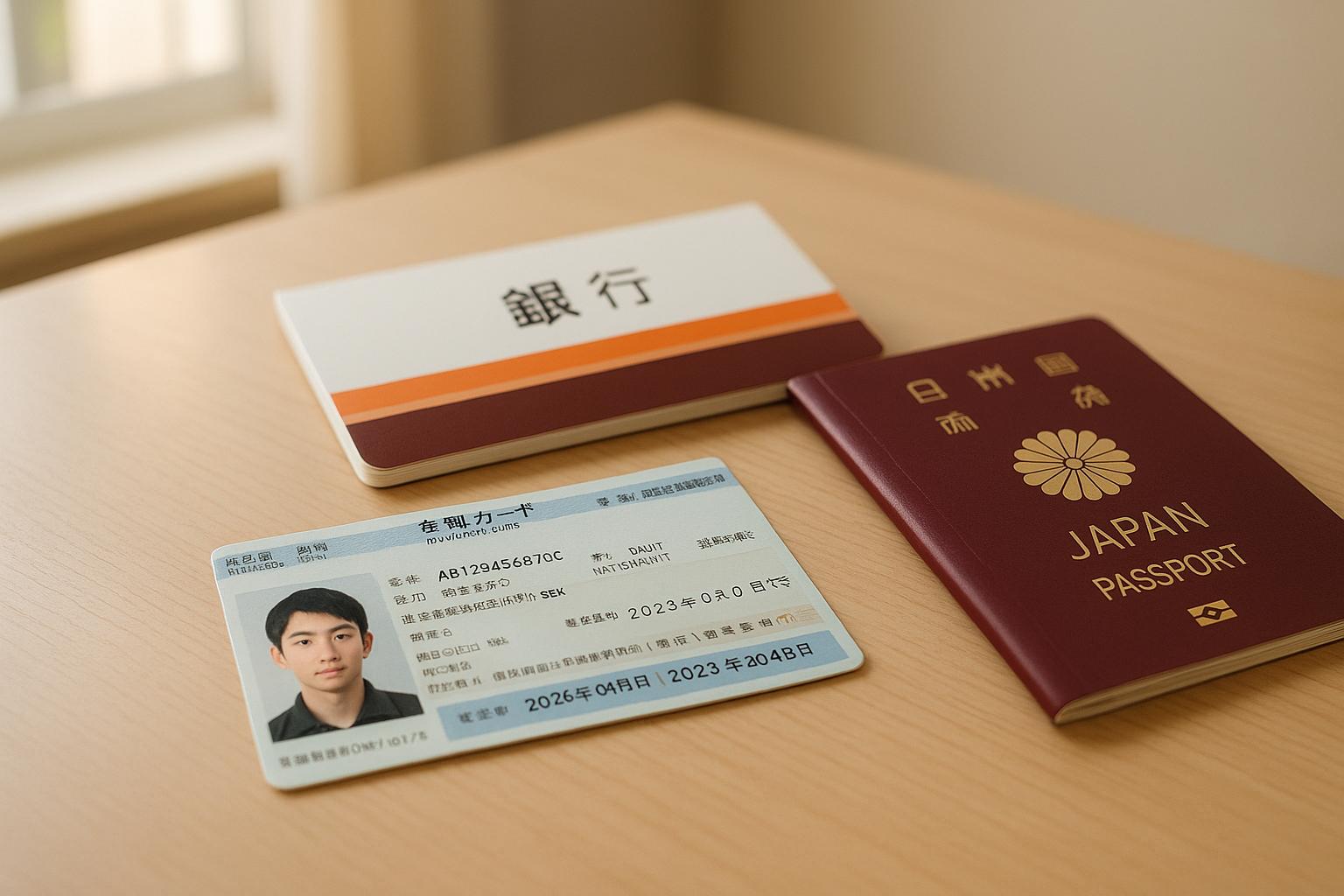
Freelancing in Japan as an English speaker can be challenging, but the right platforms and resources make it manageable. Whether you're a resident or working remotely with Japanese clients, navigating language barriers, taxes, and payments in yen are common hurdles. Here's a breakdown of the best platforms to find freelance work and resources to simplify life in Japan:
- Job Platforms: GaijinPot Jobs (English-friendly, ¥1,500–¥4,000/hour), Daijob (bilingual, ¥3,000–¥8,000/hour), YOLO Japan (entry-level, ¥1,000–¥2,500/hour), WeXpats Jobs (flexible roles, ¥2,000–¥7,000/hour), and Upwork (international, ¥2,200–¥7,300/hour).
- Japanese Platforms: CrowdWorks, Lancers, Freelancer.jp, and Coconala offer diverse opportunities but require basic Japanese skills.
- Teaching Platforms: Cafetalk, italki, and Preply let you tutor online with flexible rates. Companies like One Coin English provide structured teaching roles.
- Support for Freelancers: Myjin connects you with English-speaking visa lawyers, tax accountants, and clinics, plus guides on taxes, health insurance, and more.
Quick Tip: Combine English-friendly platforms for steady work while exploring Japanese platforms to expand your client base. Use Myjin for essential services to streamline administrative tasks.
[Freelance Maxing in Japan] Everything you need to know about freelancing IT engineering in Japan.
Freelance Job Platforms for English Speakers
Finding the right platform can make a big difference in your freelance career in Japan. Each platform caters to different needs, offering varying levels of English support, job types, and ways to connect freelancers with opportunities. Whether you're targeting local Japanese clients or looking for international work, there's a platform to suit your language skills, industry, and career goals.
GaijinPot Jobs
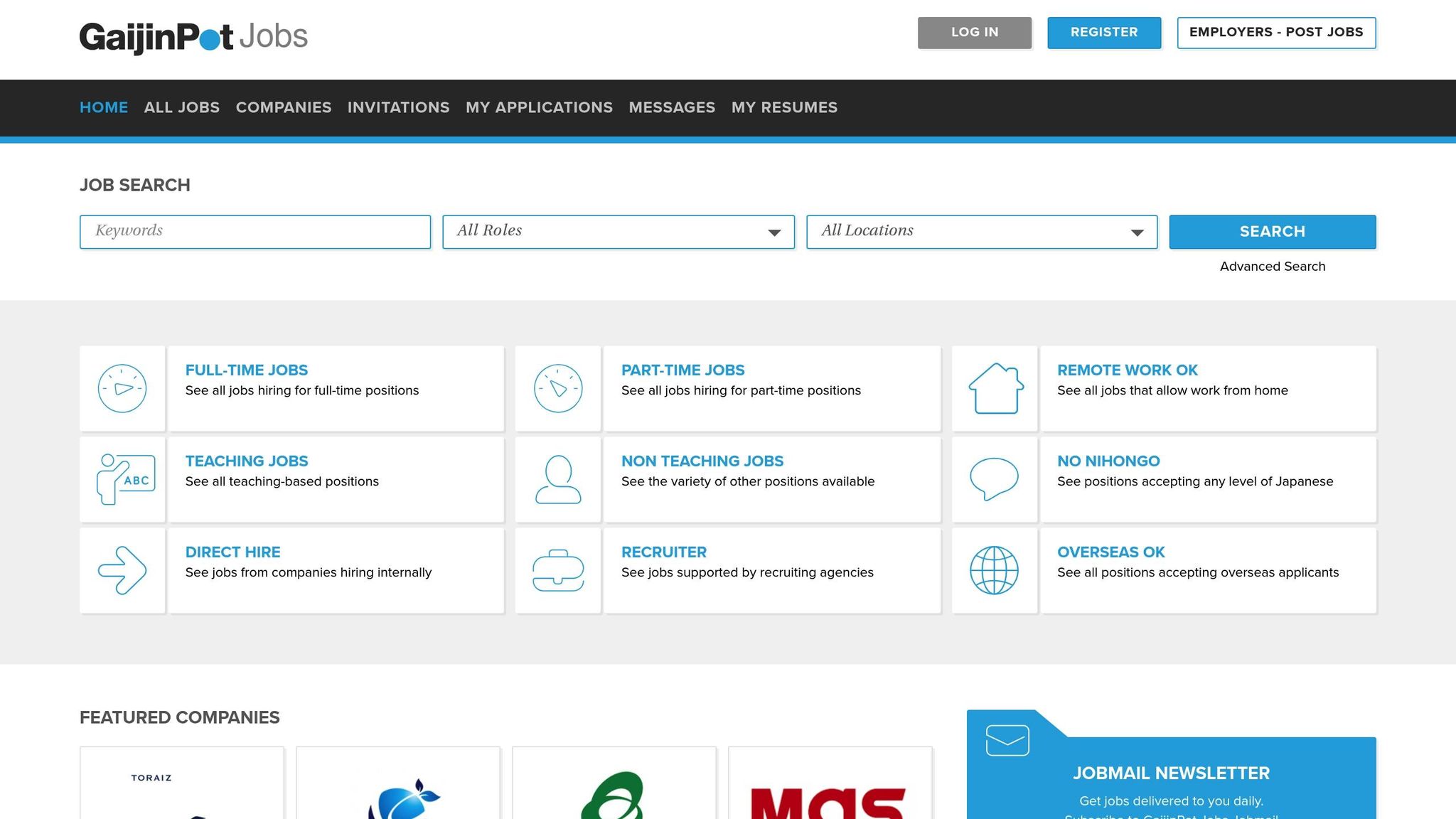
If you're an English-speaking freelancer in Japan, GaijinPot Jobs is a great place to start. Designed for foreign residents, the platform operates entirely in English, making it ideal for those without Japanese language skills.
Opportunities include freelance, contract, and part-time roles, alongside full-time positions. Common job categories are English teaching, tutoring, content writing, translation, editing, marketing, IT, and customer service. Detailed job descriptions often include visa sponsorship details, which is helpful if you're navigating Japan's legal requirements.
GaijinPot also features forums where users can share advice on living and working in Japan, adding extra value beyond job listings.
Payment and rates: Jobs on GaijinPot typically pay in yen via bank transfer. Hourly rates for freelance roles like tutoring or content writing range from ¥1,500 to ¥4,000, depending on your experience and the job type. It's a solid choice for newcomers or those seeking short-term, project-based work without requiring Japanese proficiency.
Daijob
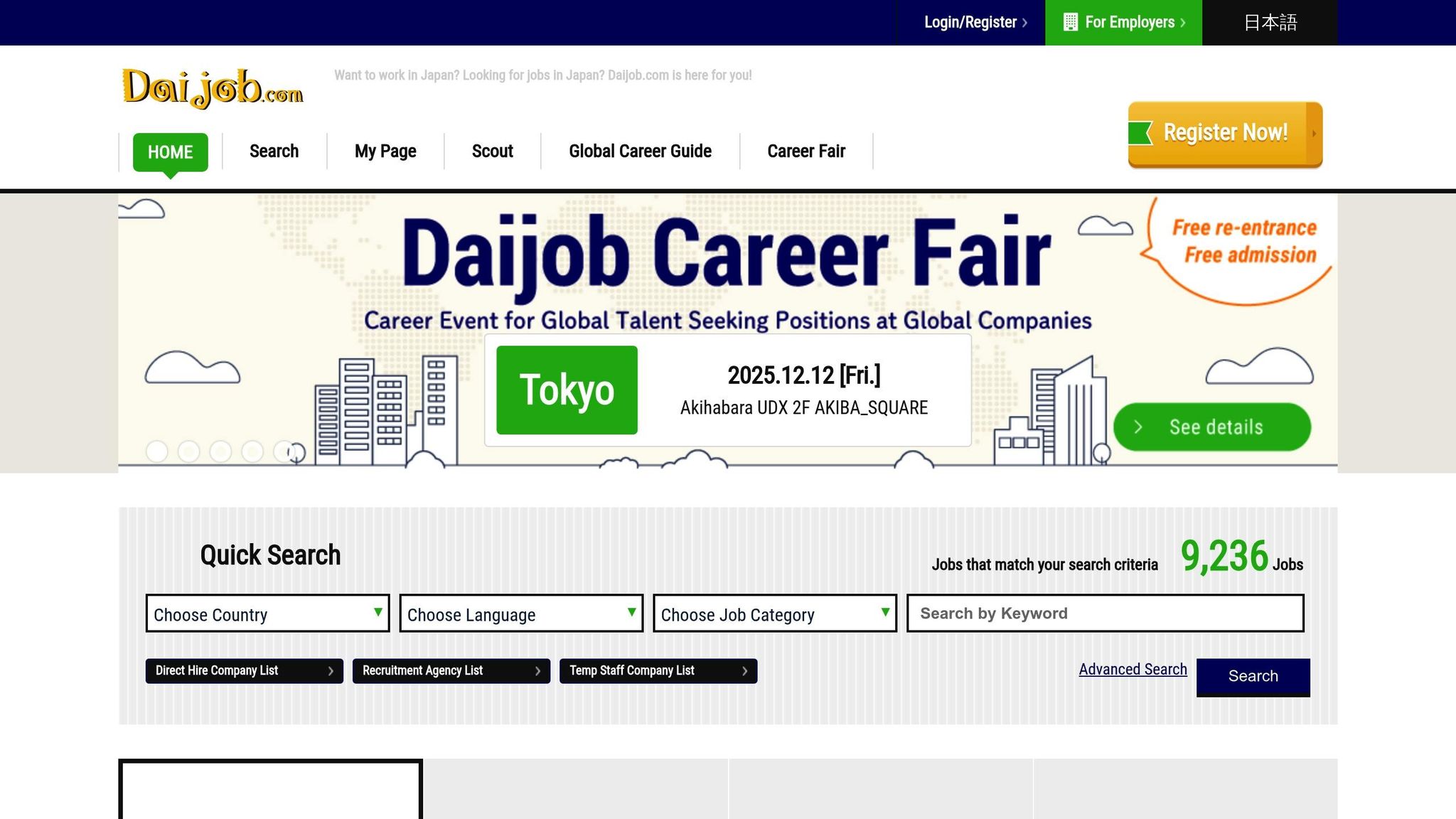
For freelancers fluent in both English and Japanese, Daijob offers access to higher-paying opportunities. This platform focuses on industries like IT, finance, marketing, sales, and consulting - fields where bilingual skills are a major advantage.
Freelancers can find roles in content creation, translation, localization, digital marketing, and business development. The platform is easy to navigate, and you can filter jobs by language requirements, industry, and contract type. Additionally, Daijob allows direct interaction with recruiters, giving you a chance to showcase your skills more effectively.
Payment and rates: Payments are made in yen via bank transfer. Bilingual freelancers can earn ¥3,000 to ¥8,000 per hour, with higher rates reserved for those with strong Japanese skills and specialized expertise.
YOLO Japan
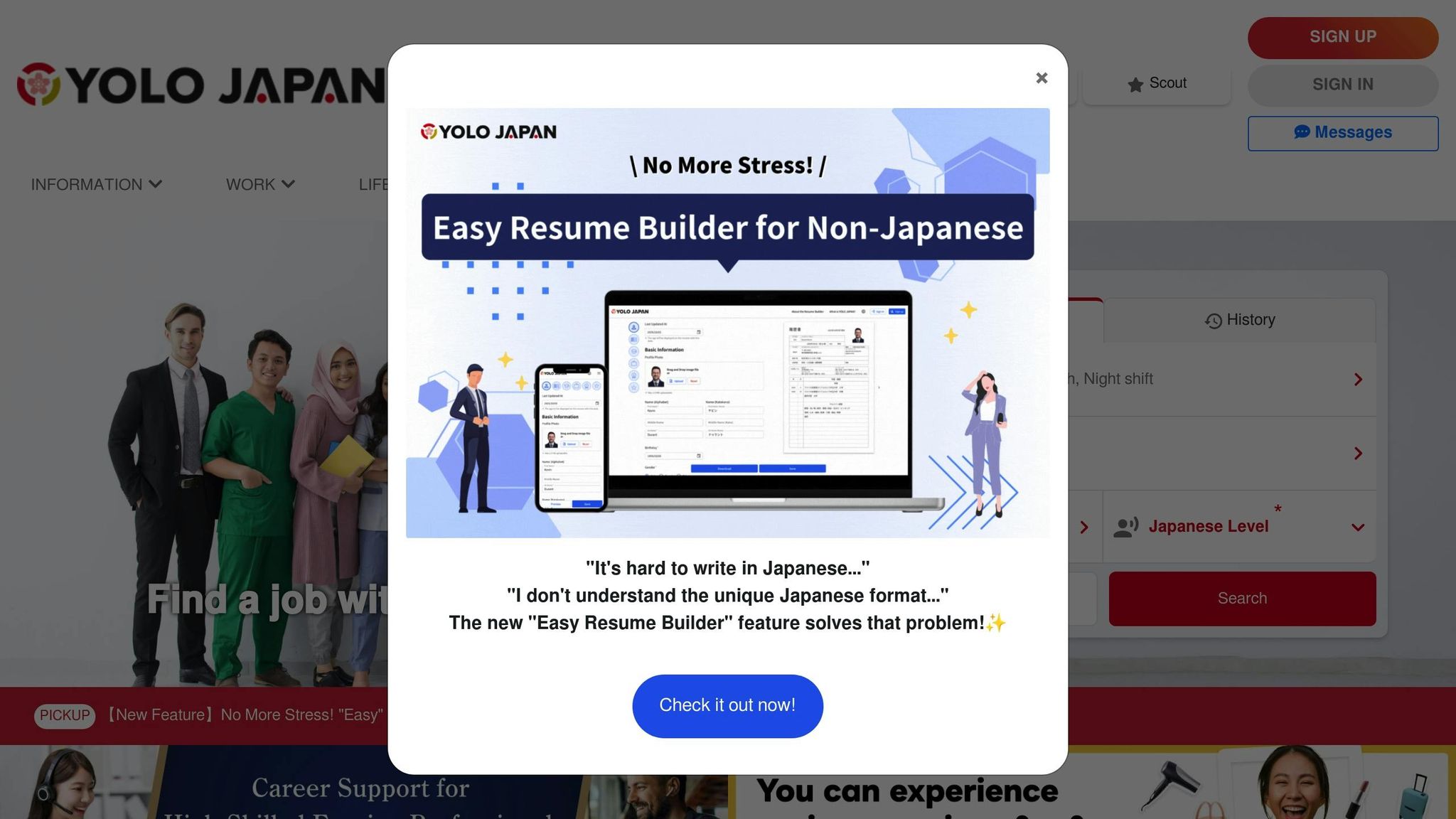
YOLO Japan is tailored for foreign nationals and offers a user-friendly interface in multiple languages, including English. It's particularly useful for those on student or working holiday visas, offering flexible, short-term roles that align with visa restrictions.
The platform lists jobs in hospitality, retail, teaching, tutoring, content creation, translation, and digital services. You’ll find roles like event staffing, online tutoring, and short-term marketing projects. Strong filtering options help you search by language requirements, visa sponsorship, and job type.
YOLO Japan is best for freelancers at the start of their careers or those looking to supplement their income with accessible, short-term work.
Payment and rates: Payments are typically made in yen via bank transfer or cash for short-term gigs. Hourly rates range from ¥1,000 to ¥2,500, reflecting the platform’s focus on entry-level or less specialized roles.
WeXpats Jobs
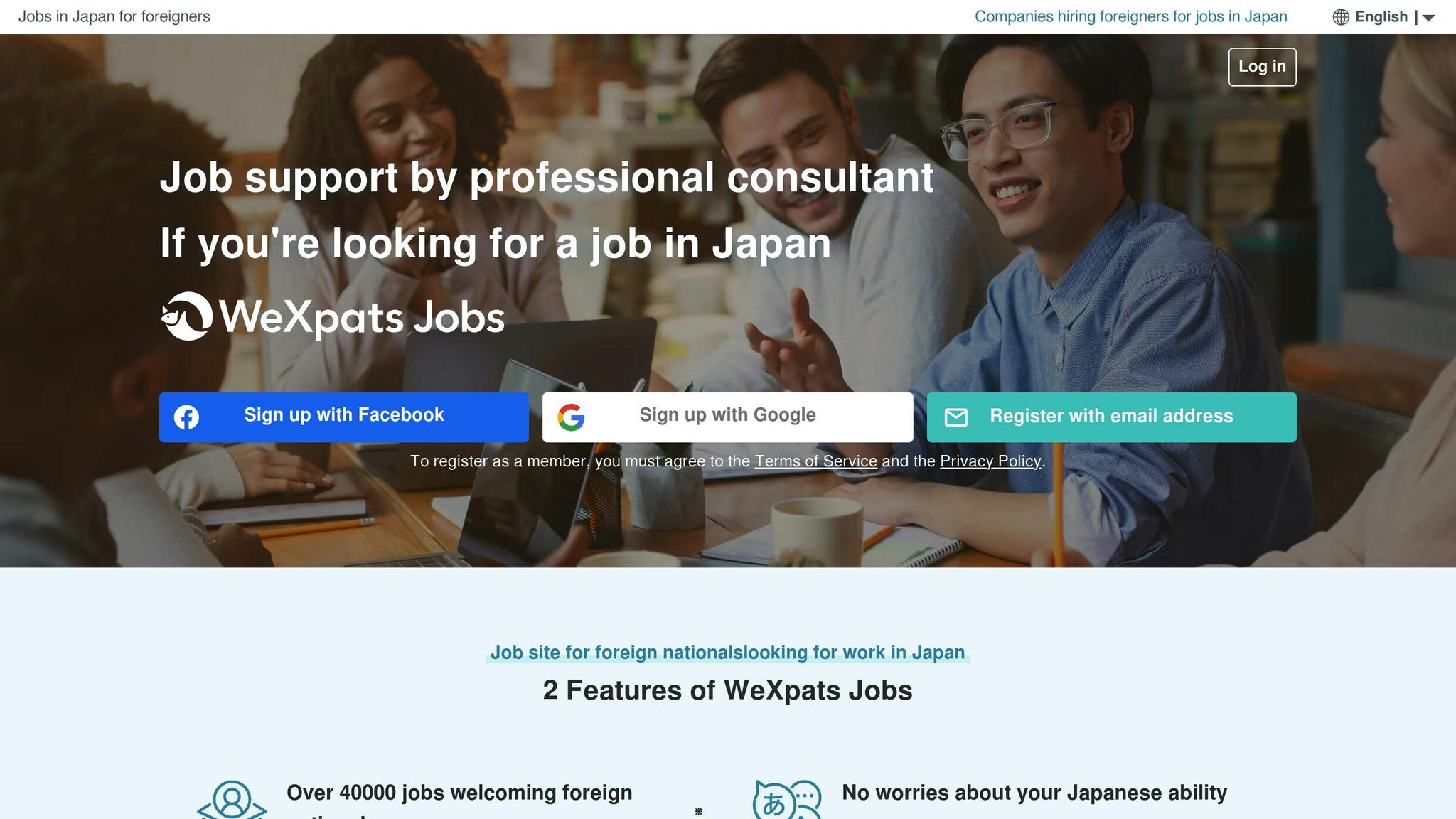
WeXpats Jobs is designed for foreign nationals and offers extensive filtering options by language requirements, visa sponsorship, and industry. It lists freelance, contract, part-time, and full-time roles across sectors like IT, education, hospitality, marketing, and customer service.
English-speaking freelancers can find opportunities in content writing, translation, online teaching, digital marketing, and technical support. The platform’s global reach and expat-friendly design make it suitable for freelancers at all career stages.
One standout feature is that many job listings clearly state whether Japanese is required, saving you time when searching. You’ll also find a mix of remote, hybrid, and on-site roles, offering flexibility in how you work.
Payment and rates: Local roles are usually paid in yen via bank transfer, though some international positions may pay in USD or EUR through PayPal or Wise. Freelance rates range from ¥2,000 to ¥5,000 per hour for writing or translation work, and ¥4,000 to ¥7,000 per hour for IT or marketing roles, depending on your skill level and whether Japanese is required.
Upwork for Japan-Based Freelancers

If you're looking for international opportunities while living in Japan, Upwork is a top choice. This global platform connects freelancers with clients worldwide, making it ideal for English speakers with specialized skills.
Success on Upwork depends on building a strong profile that highlights your expertise in areas like writing, editing, translation, graphic design, web development, digital marketing, or virtual assistance. Tailoring each proposal to the job is key to winning contracts.
Upwork charges a commission of 5-20% based on your earnings, with lower rates for long-term client relationships. Payments are processed in USD, EUR, or other currencies, and you can receive funds via PayPal, Payoneer, or direct bank transfer.
Payment and rates: Rates are often quoted in USD, with Japan-based freelancers typically charging $15 to $50 per hour (approximately ¥2,200 to ¥7,300 per hour at ¥147 per USD). Entry-level roles might pay around ¥1,000 to ¥2,000 per hour, while experienced professionals in fields like development or marketing can charge ¥5,000 to ¥10,000+ per hour.
Upwork is a great option for freelancers seeking location independence, international clients, and higher-paying opportunities. Just remember, you’ll need to handle your own taxes in Japan, including filing income tax returns and managing consumption tax if your annual revenue exceeds ¥10 million.
Japanese Platforms with English Work Opportunities
Exploring Japanese freelance platforms can open up a world of opportunities for English speakers, especially if you bring specialized skills to the table. These platforms serve as a bridge between Japan's domestic market and your English expertise. Below are some key platforms where even a basic understanding of Japanese can help you land diverse freelance gigs.
Crowdworks, Lancers, and Freelancer.jp

Crowdworks and Lancers are two of Japan's most popular freelance platforms, but they operate primarily in Japanese. To navigate job postings and communicate effectively, you'll need at least basic Japanese reading skills. These platforms offer a range of opportunities, including translation, content creation, localization, web development, and digital marketing.
Freelancer.jp, part of a global network boasting over 85.6 million users and 25.2 million jobs across more than 2,700 categories, simplifies the search for English-speaking roles through its "英語の仕事" (English Jobs) filter. While the interface is in Japanese, this filter makes it easier to find roles suited to your expertise.
"80%の仕事が60秒以内に入札されます。"
With 80% of jobs receiving bids within 60 seconds, speed is critical. The platform also uses a milestone payment system, ensuring funds are securely held in escrow until the project is completed.
For those interested in smaller, service-based gigs, Coconala is another excellent option.
Coconala for Small-Scale Services
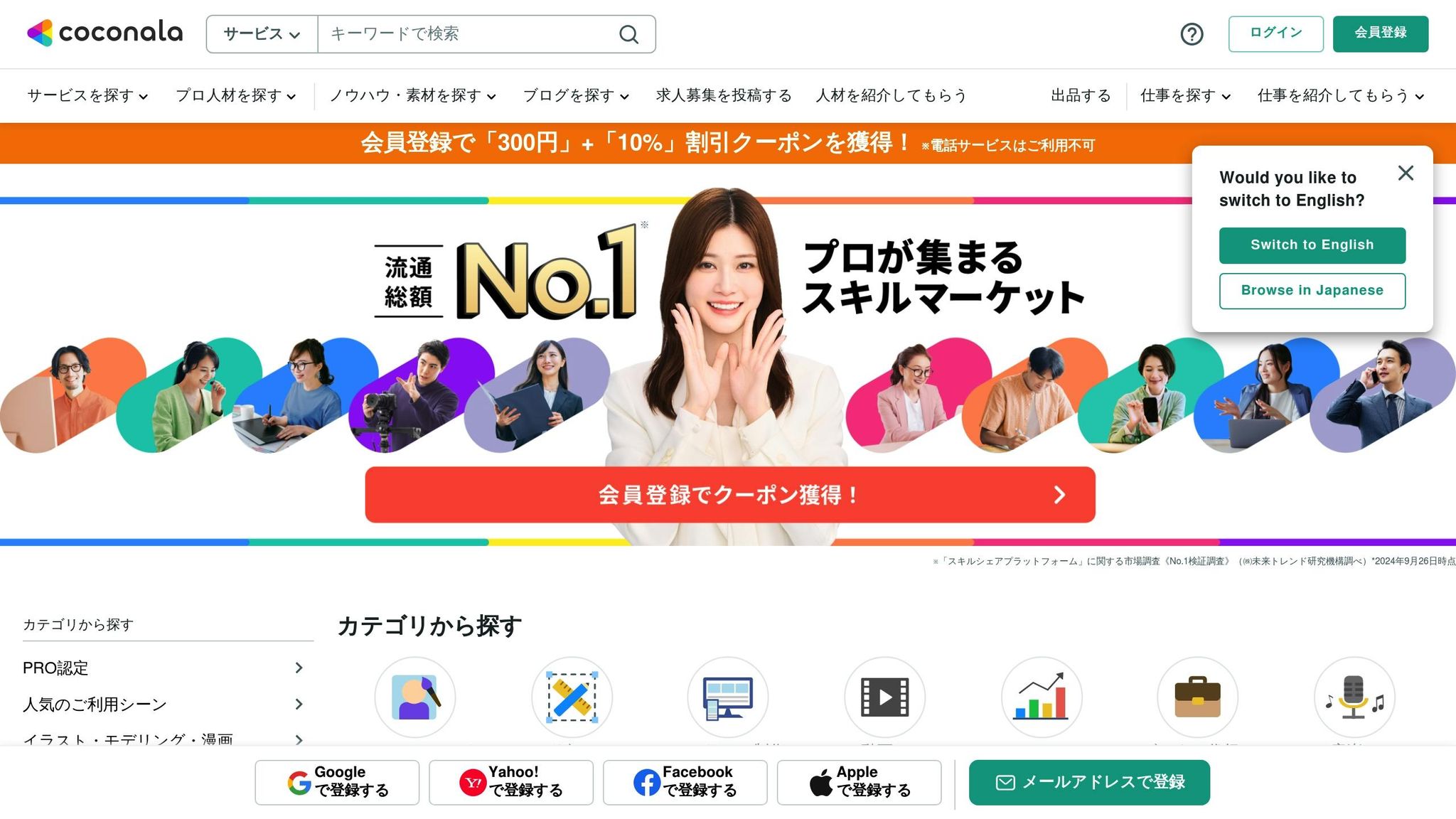
Coconala operates as a marketplace where freelancers create service listings that clients can purchase directly. It focuses on short-term, one-off services rather than extensive, long-term projects. While the interface is in Japanese, services offered in English are welcomed. Common offerings include English conversation practice, resume and cover letter editing, translation, proofreading, and creative services like logo design or illustration.
To stand out, craft clear, detailed service descriptions in Japanese and include high-quality visuals. Building a strong reputation through positive reviews early on can help you charge higher rates over time. Many English teachers and content creators use Coconala to supplement their income, finding a steady stream of small projects that, collectively, can make a significant impact.
sbb-itb-cbc0cbb
English Teaching Platforms
If you're an English-speaking freelancer in Japan aiming to teach online, you'll find two main options: global marketplaces where you control your rates and schedule, and Japan-focused companies offering structured lessons, ready-made materials, and steady income. Here's a closer look at how these platforms cater to English tutors in Japan.
Cafetalk, italki, and Preply
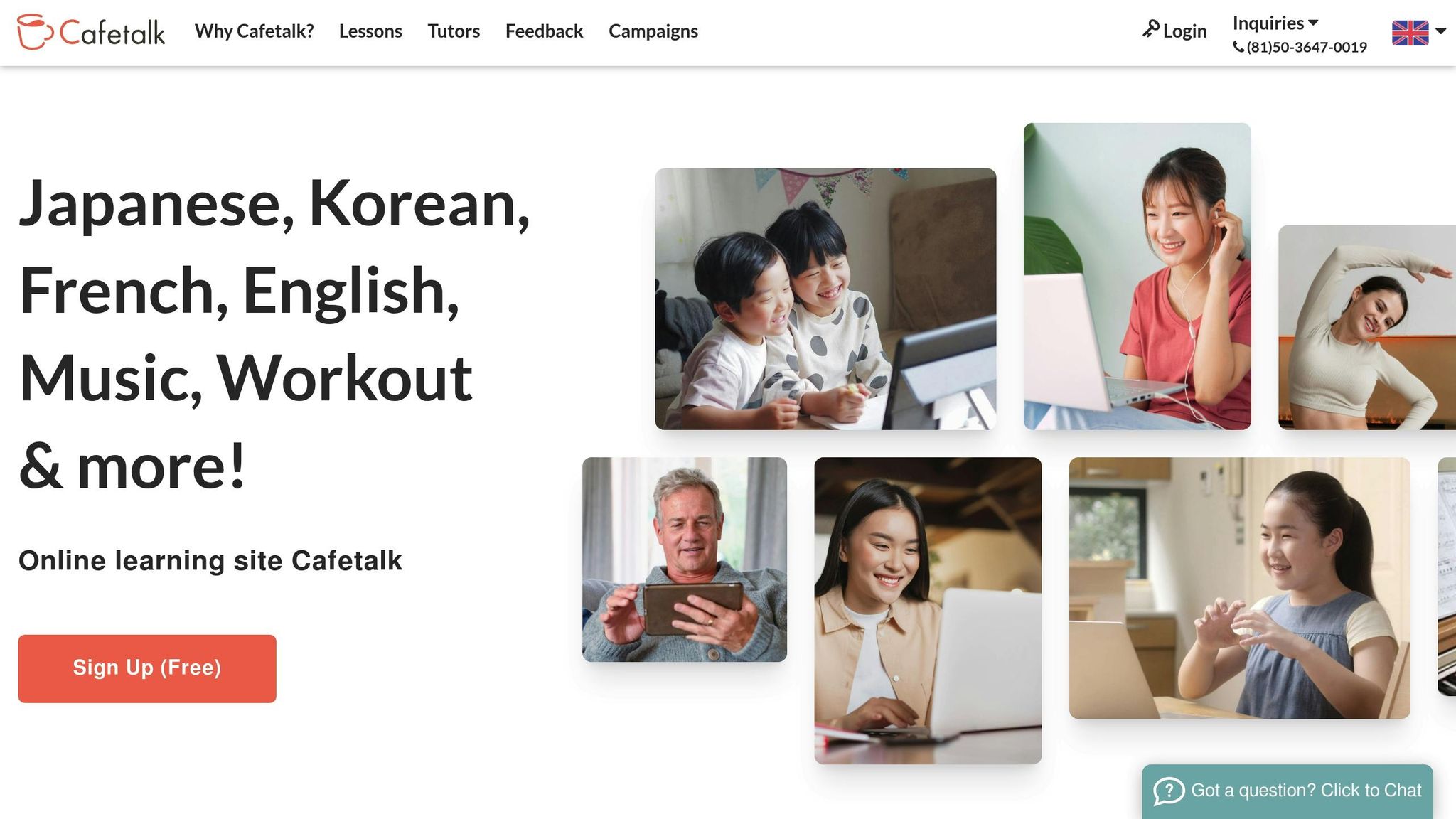
Cafetalk is tailored for Japanese learners, making it a great choice for tutors in Japan. The platform uses a "lesson menu" system, allowing you to create specific offerings like a 50-minute TOEIC speaking session or business email corrections. Japanese students often seek conversation practice, business English skills for meetings and presentations, and exam prep for tests like TOEIC, Eiken, and IELTS. Cafetalk typically looks for tutors with a bachelor's degree and some teaching or coaching experience. You’ll also need an introductory video and well-thought-out lesson proposals. The platform operates on a commission system, with rates decreasing as your sales increase.
Italki and Preply, on the other hand, are global platforms that connect you with students worldwide. While both allow you to focus on Japanese learners through profile tags, language filters, and time zone settings, their approach is more flexible. Teachers here create fully customized lessons and offer trial sessions. For example, Preply tutors can charge between US$10 and US$45 per hour, with commissions starting higher for initial lessons but decreasing as you build long-term student relationships. While a TEFL/TESOL certificate or a bachelor's degree is preferred, it's not mandatory for all categories, as long as you can demonstrate strong language skills and professionalism through your profile and introductory video.
All three platforms require basic online teaching tools like Skype or Zoom. The application process involves submitting your details, teaching languages, and an introductory video. Once approved, you’ll design lesson offers, set prices, and open time slots aligned with peak Japanese hours. To attract students early on, offer discounted trial lessons, respond promptly to inquiries, and provide personalized feedback. On Cafetalk, taking part in seasonal campaigns can boost visibility, while on italki and Preply, maintaining a high response rate and positive reviews can improve your ranking.
Tutors set their rates in major currencies, with Japanese students billed in yen. Payments are processed through methods like PayPal, Payoneer, or bank transfers, with conversion fees applying. Japan-based freelancers should account for currency exchange rates, transfer fees, and Japanese income tax when calculating their earnings.
Japanese Companies for English Teaching
If you prefer structured schedules and pre-made materials, Japanese companies like One Coin English and Lyngo might be a better fit. Unlike global platforms, these companies provide a clear framework, helping you navigate language and scheduling challenges.
One Coin English hires Japan residents with valid work permits. Tutors earn ¥725–¥1,000 per 50-minute lesson, with a minimum commitment of 15 hours per week, including at least one weekend day. Lessons are conducted via Zoom using provided materials, and payments are made monthly via direct deposit to a Japanese bank account.
Lyngo hires both native English and Japanese speakers and offers training along with ready-made lesson plans. While TEFL certification is preferred, it’s not a strict requirement. Tutors earn about US$10–US$11 per hour (roughly ¥1,000 to ¥1,100) with a minimum weekly commitment of six hours. Peak teaching hours are between 20:00 and 24:00 JST, especially on weekends. Payments are processed through PayPal.
The choice between global platforms and Japan-focused companies depends on what you prioritize. If you value flexibility and the potential for higher earnings, platforms like Cafetalk, italki, and Preply allow you to set your own rates and schedule. However, they require effort in self-promotion. If you prefer predictable income and a fixed schedule, companies like One Coin English and Lyngo provide stability with pre-designed lessons, though there’s less room for wage growth or creative input.
When teaching Japanese students online, it’s important to align with their expectations. They often appreciate politeness, structure, and clear objectives. Starting lessons with a brief agenda and ending with a recap or homework suggestions can enhance their learning experience. Many learners may be shy during free conversation, so using structured prompts, role-playing scenarios like meetings or travel, and offering clear guidance can help them feel at ease. Being punctual, using simple visual aids, and incorporating basic Japanese classroom phrases (such as confirming understanding) can build trust, leading to better reviews and repeat bookings.
Myjin: A Resource for Freelancers in Japan
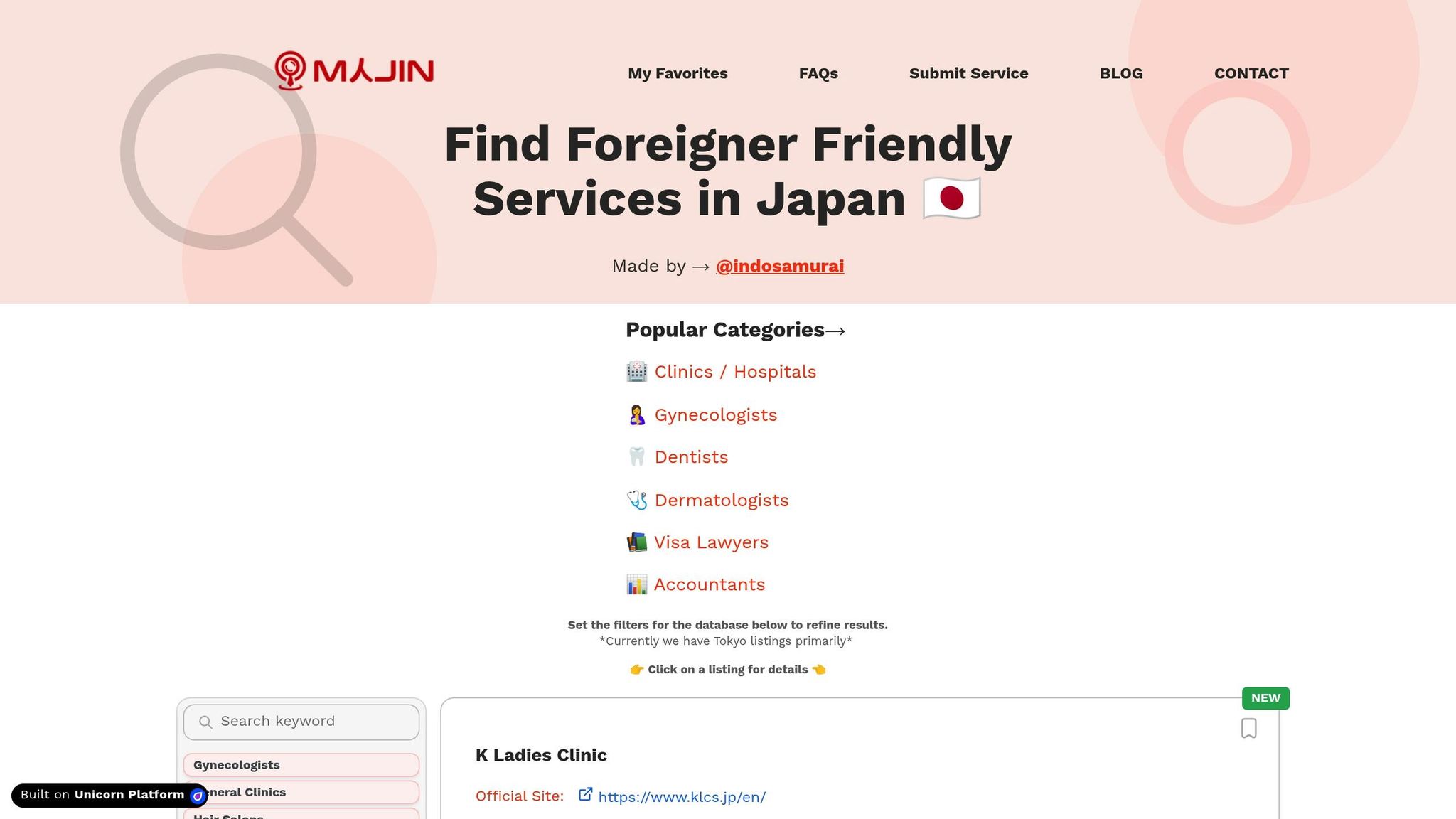
Freelancing in Japan comes with its own set of challenges, especially when it comes to navigating personal and legal matters without the support of an HR department. From healthcare to taxes to visa renewals, freelancers often have to figure things out on their own. Myjin steps in as a go-to directory, connecting English-speaking residents with foreigner-friendly services across Japan.
Finding Foreigner-Friendly Services
Myjin curates a list of trusted professionals and businesses in key categories that freelancers often need: visa lawyers, tax accountants, clinics, gynecologists, dentists, dermatologists, hair salons, and nail salons. Each entry includes essential details like contact information, the nearest train station with walking time, and - crucially - whether English support is available. This focus on practical information helps users avoid the frustration of language barriers.
For example, a tax accountant's listing might mention that they handle blue return filings and offer English consultations, or a clinic might specify that it accepts National Health Insurance and has English-speaking staff on certain days. These specifics save freelancers time and reduce the guesswork involved in finding reliable services.
Visa lawyers are a standout feature of the platform. Many listings highlight expertise in areas like residence status changes, renewal procedures, and freelance-specific visa categories such as "Engineer/Specialist in Humanities/International Services" or "Self-Employed." This makes it easier for freelancers to find professionals who understand their unique needs and can guide them through the often-complicated paperwork.
Healthcare listings are equally detailed. You can search for clinics by location, check if they accept your insurance, and confirm whether staff can communicate in English. For women freelancers, Myjin addresses a common issue by listing gynecologists and women’s health clinics that provide clear explanations of contraception, fertility, and pregnancy options in English - filling a gap that many expat women report struggling with.
Resources for Freelancers
In addition to its directory, Myjin offers English-language guides to help freelancers tackle everyday challenges. These guides cover topics like managing National Health Insurance, filing tax returns, and handling other administrative tasks. Written in simple, straightforward English, they include step-by-step instructions, local examples (such as how to fill out a tax form at a ward office), and links to official resources.
For taxes, the guides explain the basics of income tax, resident tax, and consumption tax thresholds, along with important deadlines like the 15 March filing date. They also detail what documents you’ll need to prepare. On the healthcare side, Myjin provides tips on what to bring to a clinic visit - like your residence card and insurance card - and how to describe symptoms in English or basic Japanese.
The platform also connects users with helpful external tools, such as Japan Healthcare Info for medical details, Japan Tax Calculator for financial planning, and Freedom Tax for simplified tax services. These resources make it easier to understand next steps and ensure compliance with local regulations.
Free and Premium Listings
Myjin’s directory is designed to be accessible. Basic listings for foreigner-friendly services are offered for free, ensuring that essential providers - like small clinics, salons, and accounting offices - can reach English-speaking users without any cost. This keeps the platform inclusive and useful for freelancers looking for affordable options.
For businesses seeking more visibility, Myjin provides premium listing options. These may include perks like featured placement, additional photos, or special badges such as "English-speaking" or "foreigner-friendly." Currently, Myjin is offering free premium listings for small businesses that cater to foreigners, helping them attract more clients without a hefty marketing budget.
This model benefits everyone: freelancers can discover a mix of budget-friendly and premium services, while small businesses gain a cost-effective way to connect with the foreign community. The result is a win-win ecosystem where freelancers find what they need, and service providers grow their reach.
The best part? Browsing the directory and accessing all resource articles is completely free. While Myjin’s coverage is strongest in major cities like Tokyo, Yokohama, Osaka, Kyoto, and Fukuoka, the platform continues to expand. However, it’s worth noting that Myjin is a directory, not a booking or legal advice service - always double-check business hours, fees, and availability directly with the provider before visiting.
Conclusion
Freelancing in Japan as an English speaker has never been more accessible. The platforms discussed here - ranging from English-focused job boards to global freelancing and teaching platforms - make it easier to overcome language barriers with features like English-friendly interfaces, clear job descriptions, and added support. These tools are designed to help you build a steady stream of clients, especially if you're a foreign resident or English speaker.
For those willing to dive into Japanese-language platforms, there's a wealth of opportunities waiting. With the help of translation tools, these platforms open doors to a vast client base. They’re also great for testing niche services, even if your portfolio is still small, making them a practical way to earn extra income on the side.
The key to success lies in using a strategic mix of these platforms. Start with English-first job boards to secure roles that align with your language skills and visa requirements. Expand to global freelancing sites to diversify your income in foreign currencies. As your confidence grows, explore Japanese marketplaces to tap into local opportunities. This approach helps balance yen-based local income with international projects, reducing reliance on any single market.
On top of that, resources like Myjin can connect you with English-speaking professionals - visa consultants, tax advisors, and even clinics - to handle the non-work essentials of freelancing in Japan. Without an HR department to rely on, tasks like healthcare, taxes, and visa renewals fall on your shoulders. Having access to reliable, English-speaking support makes these responsibilities much easier to manage, giving you more time and energy to focus on your work and skill development.
To get started, choose one or two platforms that align with your expertise, set up a detailed profile with yen-based rates and availability in JST, and begin applying. Keep Myjin handy for any legal or tax-related needs. With the right combination of job platforms and support systems, freelancing in Japan can evolve from a short-term gig into a sustainable, long-term career.
FAQs
What should freelancers in Japan know about managing taxes, especially when working with international clients on platforms like Upwork?
Freelancers in Japan should stay informed about their tax responsibilities, particularly when dealing with income from international clients. To start, make sure to register as a sole proprietor (kojin jigyo) at your local tax office. This step is necessary for filing your annual tax return (kakutei shinkoku), which is generally due by 15 March every year.
For income earned from overseas clients, you’ll need to report all earnings in Japanese yen (¥). To do this, use the exchange rate provided by the Bank of Japan or another official source to convert foreign currency income. Also, be aware of consumption tax (10%), which may apply if your total annual income exceeds ¥10,000,000.
Maintaining accurate records of your income and expenses is essential. Using accounting software or consulting with a tax accountant can simplify the process and help ensure compliance. If you’re uncertain about specific regulations, seeking advice from a professional - such as those available through platforms like Myjin - can be particularly helpful for English-speaking freelancers navigating Japan’s tax system.
What are some tips for English-speaking freelancers to use Japanese job platforms like CrowdWorks or Lancers with limited Japanese skills?
Navigating Japanese-language freelance platforms can feel daunting if you're not fluent in Japanese, but it's definitely doable with the right approach. Start by taking advantage of translation tools - browser extensions or mobile apps can help you convert job descriptions, platform menus, and messages into English. While these translations might not be perfect, they’re usually enough to grasp the essentials.
When browsing opportunities, prioritize jobs that specifically mention English skills or cater to international clients. Many listings will indicate whether Japanese proficiency is required, so make use of filters to streamline your search and avoid unnecessary frustration.
It’s also a good idea to prepare a simple and polite template message in Japanese for reaching out to potential clients. Even if your Japanese is basic, this small effort can leave a positive impression and demonstrate your professionalism.
What should freelancers in Japan do to ensure their visa allows them to work legally?
Freelancers in Japan need to confirm that their visa allows freelance work. Start by reviewing the specific conditions tied to your visa. For instance, the Engineer/Specialist in Humanities/International Services visa might permit freelance activities, provided they fall within the visa's defined scope. If your visa doesn’t clearly allow freelancing, it’s wise to consult with an immigration lawyer or visit the local immigration bureau for advice.
If you’re considering freelance work outside your visa’s scope, you’ll likely need to apply for a Permission to Engage in an Activity Other Than That Permitted under the Status of Residence Previously Granted. This approval lets you legally undertake work beyond your current visa’s limitations. Ensuring compliance with these regulations is crucial to avoid any legal complications while freelancing in Japan.