Struggling to find mental health support in Japan? Here's what you need to know.
Navigating mental health care in Japan can be challenging, especially for non-Japanese speakers. From language barriers to understanding the healthcare system, getting help may feel overwhelming. But there are resources you can rely on:
- Hotlines for Immediate Help: Call TELL Lifeline (0800-300-8355, 24/7) or Yorisoi Hotline (0120-279-338, press "2" for English, 10:00–22:00 daily). Both offer free, confidential support.
- Find English-Speaking Therapists: Use directories like Myjin or the IMHPJ database to locate professionals in your area or online.
- Affordable Options: Clinics like Roppongi Clinic accept Japan's National Health Insurance (NHI), covering 70% of costs for psychiatric care.
- University Counseling: Many universities provide free or low-cost services for students, including multilingual support.
- Online Therapy: Telehealth services are expanding, making it easier to access care remotely.
Pro Tip: Prepare for appointments by bringing your insurance card, residence ID, and a summary of your symptoms. Arrange interpreters in advance if needed.
Whether you're in Tokyo or a rural area, help is available. Keep reading for detailed steps, costs, and resources to get the support you need.
Psychologist talks mental health issues for foreigners in Japan
Emergency and Crisis Helplines
If you're facing a mental health crisis, help is just a phone call away. Multilingual helplines in Japan offer free, confidential support to guide you through tough times. Below, you'll find details about key helplines that can provide the assistance you need.
Yorisoi Hotline
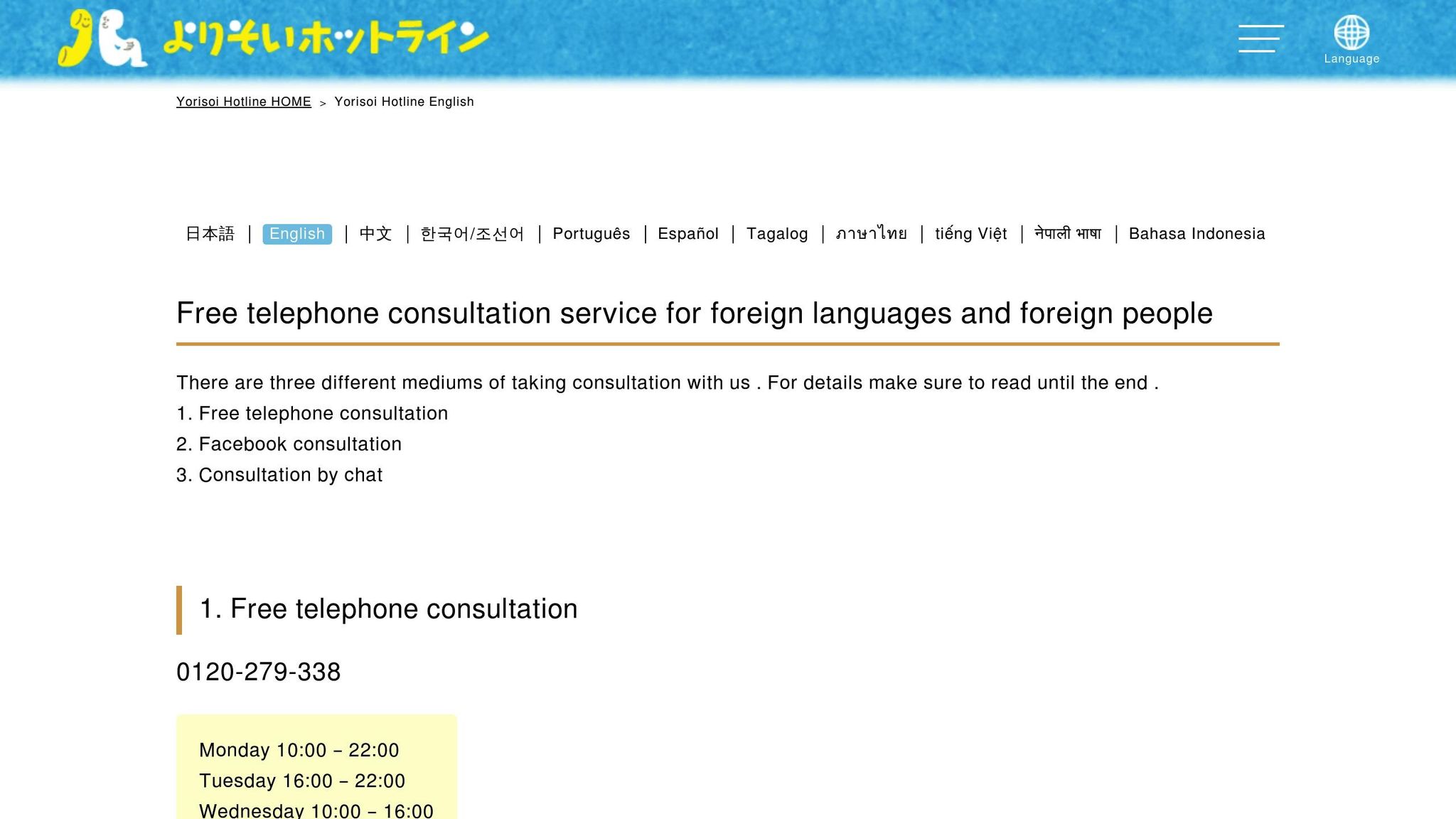
The Yorisoi Hotline is a government-supported service designed to help anyone dealing with distress, abuse, or life challenges. This free hotline has seen a 30% rise in calls from foreign residents between 2023 and 2025.
For English assistance, dial 0120-279-338 and press "2" to connect to multilingual interpreters. Support is available in English, Chinese, Korean, and other languages, operating daily from 10:00–22:00.
What sets Yorisoi apart is its focus on cultural understanding. Staff members are trained to address the unique struggles faced by foreign residents in Japan. Whether you need emotional support or practical advice on navigating local resources, they’re ready to help. Conversations remain confidential, and you don’t need to share personal details to access the service.
TELL Lifeline
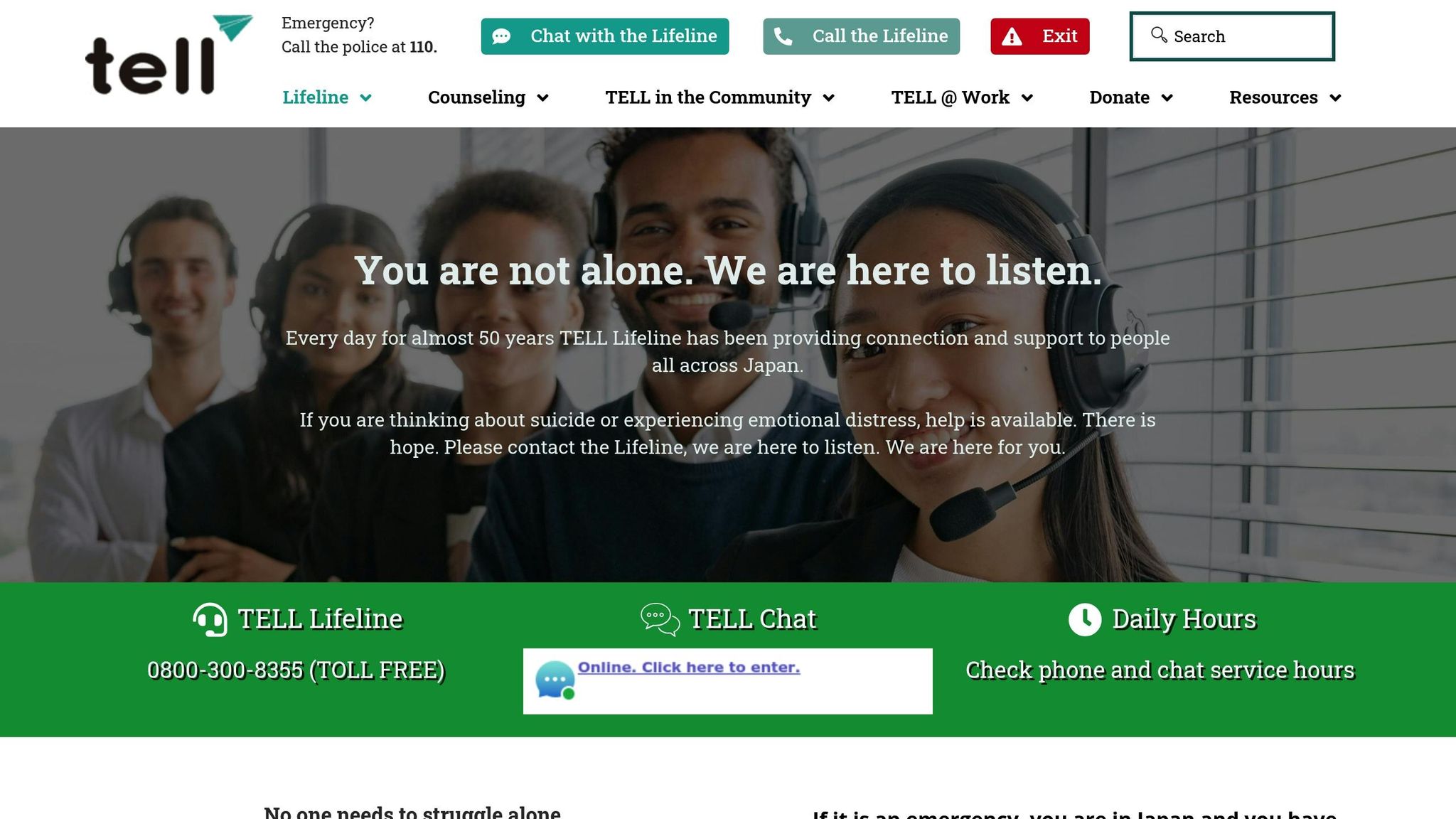
The TELL Lifeline is one of Japan's most comprehensive English-language mental health resources. Operating 24/7, TELL received over 10,000 calls in 2024, many from non-Japanese speakers seeking immediate help.
For immediate support, call 0800-300-8355 at any time. TELL also offers online chat support during specific hours: 22:30–02:00 on Friday, Saturday, and Sunday nights. This option provides a discreet way to reach out for help.
In addition to crisis support, TELL offers counselling services with licensed professionals who are familiar with both Western therapeutic approaches and Japan’s healthcare system. They provide individual, couple, and family therapy, available in-person or online, bridging the gap between urgent support and long-term care.
Crisis Helpline Comparison
| Helpline | Languages | Operating Hours | Cost | Access Methods | Special Features |
|---|---|---|---|---|---|
| Yorisoi Hotline | English, Chinese, Korean, Japanese, others | 10:00–22:00 daily | Free | Phone (0120-279-338) | Government-funded, interpreter service |
| TELL Lifeline | English, Japanese | 24/7 | Free | Phone (0800-300-8355), Online chat | Professional counselling referrals |
| Japan Helpline | Multiple languages | 24/7 | Free | Phone (0120-461-997) | General crisis support |
Before calling, it’s helpful to note your location, any safety concerns, and key symptoms you’re experiencing, especially during peak evening hours when wait times may be longer.
Both Yorisoi and TELL can connect you with additional resources, such as English-speaking therapists or information about local mental health clinics. They can also guide you through Japan’s healthcare system, including how to use insurance for mental health services.
Finding Mental Health Clinics and Counseling Services
After reaching out to crisis helplines, the next step is finding ongoing mental health care. This ensures consistent support and helps address long-term needs.
Using Myjin to Find Services
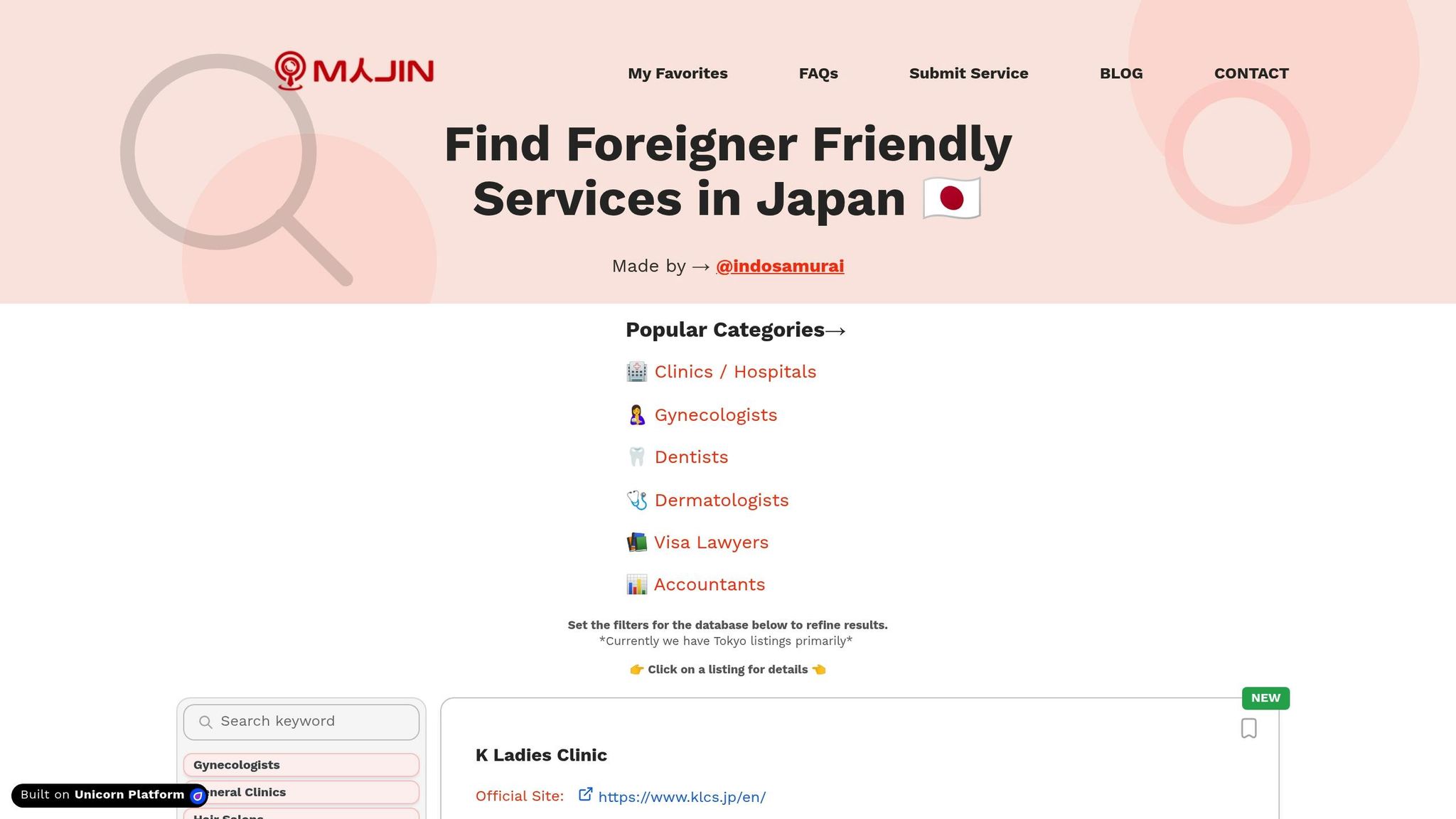
Myjin is a directory designed to help foreigners in Japan locate English-speaking healthcare providers. Within its "Clinics / Hospitals" category, you can search for mental health services using filters like location, language support, and service type. Each listing includes verified contact details, links to official websites, and Google Maps integration for easy navigation. Importantly, all providers listed on Myjin are confirmed to offer genuine English-language support.
Currently, Myjin focuses on services in Tokyo, but it’s expanding to cover more cities across Japan. Beyond its directory, the platform provides guides to help users navigate Japan’s healthcare system, making it a useful resource for finding and understanding available services.
Clinics and Online Therapy Options
In addition to directories, several clinics and online services cater specifically to foreigners seeking mental health care.
- Tokyo Mental Health operates in Tokyo and Okinawa, offering individual therapy, couples counseling, and psychiatric evaluations in English and other languages. Session costs typically range from ¥10,000 to ¥15,000, and they accept international insurance plans.
- TELL Japan Clinics extend their crisis lifeline services to include face-to-face therapy, online counseling, and community workshops. Their multilingual team ensures accessibility for diverse clients.
- Roppongi Clinic accepts Japanese National Health Insurance (NHI), which covers 70% of treatment costs. They provide psychiatric and psychological care in multiple languages, including English, Japanese, Korean, Spanish, Portuguese, Tagalog, and Thai, without extra fees for language support.
- International Mental Health Professionals Japan (IMHPJ) offers a searchable database of accredited therapists across the country. As of 2025, their directory includes 49 therapists, with 33 currently accepting new clients. This is particularly helpful for finding professionals outside Tokyo.
For those in rural areas or with busy schedules, online therapy has become a practical solution. Providers like Tokyo Mental Health and TELL Japan now offer remote sessions with licensed professionals, ensuring access to care regardless of location.
Clinic Comparison Chart
| Clinic/Service | Location | Languages | Service Types | Typical Costs | Insurance |
|---|---|---|---|---|---|
| Tokyo Mental Health | Tokyo, Okinawa | English, Japanese, others | Therapy, psychiatry, telehealth | ¥10,000–¥15,000/session | International plans |
| Roppongi Clinic | Tokyo | English, Japanese, Korean, Spanish, Portuguese, Tagalog, Thai | Psychiatry, counseling | NHI covers 70% | Japanese NHI |
| TELL Japan Clinics | Tokyo, online | English, Japanese | Counseling, crisis support | Varies by service | International plans |
| IMHPJ Directory | Nationwide | English, Japanese, others | Therapy, telehealth | Varies by provider | Varies by provider |
When choosing a clinic or service, think about your location, language needs, and budget. Tokyo offers the most options, but online therapy is an excellent alternative for those in other regions.
More providers now offer care that considers the unique challenges foreigners face in Japan. Many therapists are trained to address issues like cultural adjustment, workplace stress, and navigating Japan’s healthcare system, combining Western therapeutic methods with an understanding of local experiences.
sbb-itb-cbc0cbb
Community, University, and Nonprofit Resources
In Japan, mental health resources extend far beyond private clinics and crisis helplines. A variety of community-based services cater specifically to the needs of foreigners, offering free or affordable options that address the unique challenges of living abroad. These resources complement clinical services, focusing on cultural, academic, and broader community needs.
University Counseling Centers
International students in Japan can tap into mental health support through their university counseling centers. Institutions like the University of Tokyo and Kyoto University provide free or low-cost services, including individual counseling sessions, group meetings, and workshops. These programs address key issues such as academic stress, cultural adaptation, and overall wellbeing. Many universities offer multilingual services, with bilingual staff available to assist students. Appointments can typically be arranged through the student or health services office, and online counseling options are becoming increasingly common. Universities like Waseda University and Sophia University are particularly known for their robust support systems tailored for international students.
Nonprofit and Community Programs
Nonprofit organizations play a crucial role in offering accessible mental health support to foreigners in Japan. For example, TELL Japan provides free lifeline services, bilingual counseling (both individual and group sessions), and workshops on topics like mindfulness, stress management, and assertiveness.
Another valuable resource is Yorisoi, which connects non-Japanese speakers to local mental health services in multiple languages. They also offer interpreter support for those needing additional language assistance. Local community centers and ward offices, such as those coordinated by the Tokyo International Communication Committee, help link foreigners with bilingual therapists and support groups. Many of these programs operate on a sliding fee scale based on income, and some even host free workshops and support groups.
Embassy and Consulate Support
Your home country's embassy or consulate can also be a key resource for mental health support while in Japan. Many embassies maintain lists of English-speaking therapists and counselors who are culturally competent and experienced in working with international clients. Diplomatic missions may also provide emergency assistance and crisis intervention contacts for their nationals. Some embassies, like the American Embassy, organize wellness workshops and collaborate with English-speaking providers to offer additional support. When reaching out to your embassy, be sure to specify your location and language preferences. In some cases, consulates may offer emergency funds or assist with repatriation if returning to your home country for treatment becomes necessary.
How to Use Japan's Mental Healthcare System
Navigating Japan's mental healthcare system might seem challenging, but with the right approach, it's manageable. Here's a guide to booking appointments, understanding costs, and preparing for sessions while keeping in mind the language and cultural considerations.
Booking Appointments and Using Interpreters
Myjin is a helpful resource for finding foreigner-friendly clinics across Japan, especially in Tokyo. Many clinics, such as Roppongi Clinic and Tokyo Mental Health, offer English-speaking staff and online booking options, making the process smoother. You can typically book appointments through online forms, phone calls, or in-person visits. When reaching out, confirm language support and ask about any associated fees.
Some clinics catering to international clients provide in-house interpreters or multilingual therapists. For clinics without these services, organizations like Japan Healthcare Info (JHI) can arrange translation support during appointments. Additionally, national centers like the National Center of Neurology and Psychiatry or international desks at city halls can help coordinate interpreter services. Be sure to request interpreter assistance when booking and clarify any extra charges or time limits.
Once your appointment is set, the next step is understanding the costs and insurance coverage.
Costs and Insurance Coverage
Japan's National Health Insurance (NHI) covers around 70% of psychiatric and psychosomatic services, leaving patients responsible for the remaining 30%. With NHI, psychiatric consultations usually cost between ¥1,500 and ¥3,000 per session. However, counseling services provided by clinical psychologists aren't covered by insurance and typically range from ¥10,000 to ¥20,000 for a 50-minute session.
Public hospitals generally accept NHI, but some private clinics may not. If you're uninsured in Japan, you'll need to pay the full cost upfront. Some clinics accept international insurance plans like Cigna or Tricare, and organizations such as TELL Counseling may offer sliding scale fees based on income.
Payment methods vary. While cash (in yen) is widely accepted, many clinics now take credit cards or electronic payments. Smaller clinics, however, may still operate on a cash-only basis, so check payment options when booking.
With the logistics and costs sorted, it's time to prepare for your session.
Preparing for Your Sessions
Before your appointment, gather essential documents like your insurance card, residence ID, and any medical records or lists of current medications. Having these ready will streamline the process and ensure you receive comprehensive care from the start.
If you need an interpreter, arrange this service in advance. To make communication easier, prepare a brief summary of your symptoms and concerns in English or Japanese.
Sessions, particularly psychiatric consultations, are often brief - sometimes under 30 minutes - and more formal, with therapists relying on structured questionnaires for assessments. Clinics accustomed to working with international clients aim to address cultural differences while maintaining professional standards.
During your first session, expect an intake interview that covers your symptoms, medical history, and current concerns. Therapists may use approaches like Cognitive Behavioural Therapy (CBT), which is covered by insurance for depression at designated hospitals for up to 16 weekly sessions. Being aware of these procedural and cultural nuances can help you feel more at ease.
For telehealth appointments, ensure you have a stable internet connection and a quiet, private space for your session. With the growing availability of online therapy, accessing mental health services is becoming more convenient, especially for those living outside major cities.
Summary: Steps to Access Mental Health Support
Navigating mental health support in Japan can feel overwhelming, but breaking it down step-by-step makes the process manageable.
Start by identifying your immediate needs. If you're in crisis, reach out to the TELL Lifeline at 0800-300-8355 or the Yorisoi Hotline at 0120-279-338 (press 2 for English). These services are free, multilingual, and available to assist during emergencies.
For ongoing support, online directories are your best friend. Platforms like Myjin offer a curated list of clinics that cater to foreigners, complete with verified language support and contact details. The IMHPJ database is another useful tool, allowing you to search for mental health professionals based on your location and preferred language.
Check insurance coverage and fees before making an appointment. If you're covered by National Health Insurance, it typically pays for about 70% of psychiatric care costs at participating clinics, leaving you responsible for the rest. However, private counseling sessions are not covered and can vary in cost. It's a good idea to contact clinics directly to confirm their fees, payment methods, and whether they accept insurance.
Prepare for your first visit. Bring your insurance card, residence ID, a list of any medications you're taking, and a brief summary of your symptoms. If you need an interpreter, arrange this ahead of time and confirm any additional costs. Some clinics, like Roppongi Clinic, provide English-language support at no extra charge, which can make the process smoother.
Explore all available resources. Students may find free or low-cost services through university counseling centers. Nonprofits like TELL also offer group therapy and workshops, and online therapy platforms are becoming more accessible, making it easier to find help even if you're outside a major city.
FAQs
How can I find mental health support in Japan if I don’t speak Japanese?
If you need mental health support in Japan but aren't fluent in Japanese, there are resources designed to assist you. Myjin is a helpful platform that connects you to foreigner-friendly services, including clinics and professionals who work with English-speaking individuals. The platform provides key details like contact information and locations, making it easier to find the help you need.
Moreover, several helplines and mental health providers in Japan offer services in English or other languages. Don’t hesitate to reach out - taking that first step is crucial, and there are tools available to support you throughout the process.
What are my options for finding affordable mental health support in Japan if I don’t have National Health Insurance?
If you’re not enrolled in Japan’s National Health Insurance (NHI), there are still options to access affordable mental health care. Some clinics and counseling services operate on a sliding fee scale, adjusting costs based on your financial circumstances. Additionally, various NPOs and community organizations offer low-cost or even free mental health services, particularly aimed at non-Japanese speakers.
For English-speaking residents, directories like Myjin can be a lifesaver. They list clinics and professionals who provide services in English, often including information about pricing, accessibility, and language support. These resources make it easier to find care that matches both your needs and budget. If you need immediate help, don’t hesitate to contact helplines - they can offer support right away and point you toward affordable care options.
How can I prepare for my first mental health appointment in Japan?
Preparing for your first mental health appointment in Japan? A little preparation can go a long way in making the process more comfortable and productive.
Start by gathering any relevant medical history - this could include details about past diagnoses, medications, or treatments. This information can give your provider a clearer picture of your situation. If you're worried about language barriers, think about bringing a trusted interpreter or confirming whether the clinic has English-speaking staff available.
Make sure to arrive slightly early to handle any paperwork and bring along your health insurance card (if applicable). You'll also need cash or a payment card to cover any fees. To ensure you don't overlook anything important, jot down your symptoms, concerns, or questions ahead of time. This preparation can help you communicate effectively and get the most out of your session with the mental health professional.